
Human Design
Human Design Strategy Explained: How Each Type Moves Through Life
Human Design strategy is how your type is meant to engage with life. See what all five strategies look like in practice, and how to test yours in 30 days.
Published on 2026-07-14·11 min read·28 views·The OriCode Team

Human Design Strategy Explained: How Each Type Moves Through Life
Human Design strategy is the most practical piece of the entire chart. Your type describes what kind of energy you carry; your strategy describes how that energy is meant to meet the world — whether you initiate, respond, wait for an invitation, or give a decision a full lunar cycle. Most people who feel chronically stuck aren't short on effort. They're engaging with life in a way that creates friction for their specific design, and strategy names exactly where that friction comes from.
Quick Answer: Human Design strategy is the mode of engagement assigned to each of the five types: Manifestors inform before acting, Generators wait to respond, Manifesting Generators respond and then inform, Projectors wait for recognition and invitation, and Reflectors wait through a lunar cycle before major decisions. Strategy tells you how to engage with opportunities; your authority then tells you which ones to say yes to.
What Is Strategy in Human Design?
In the Human Design system, every chart resolves into one of five types, and each type comes with one strategy — a default way of moving through decisions, opportunities, and other people.
Strategy is often described as the "aura mechanics" of your type: how your energy field interacts with the energy of everything around you. You don't need to take the aura framing literally to use the tool. Read it instead as a behavioral hypothesis: if I engage this way, I meet less resistance; if I engage that way, I meet more.
Two things make strategy worth learning before almost anything else in your chart:
- It's binary and observable. You either informed people before acting or you didn't. You either waited for something to respond to or you initiated cold. That makes strategy testable in a way that most personality frameworks are not.
- It comes with built-in feedback signals. Each type has a "signature" feeling when strategy is working and a "not-self theme" when it isn't — frustration, anger, bitterness, or disappointment. If you want the full map of those signals, see our guide to Human Design not-self themes.
If you're brand new to the system and don't know your type yet, start with our beginner's introduction to Human Design, then come back here.
The Five Strategies at a Glance
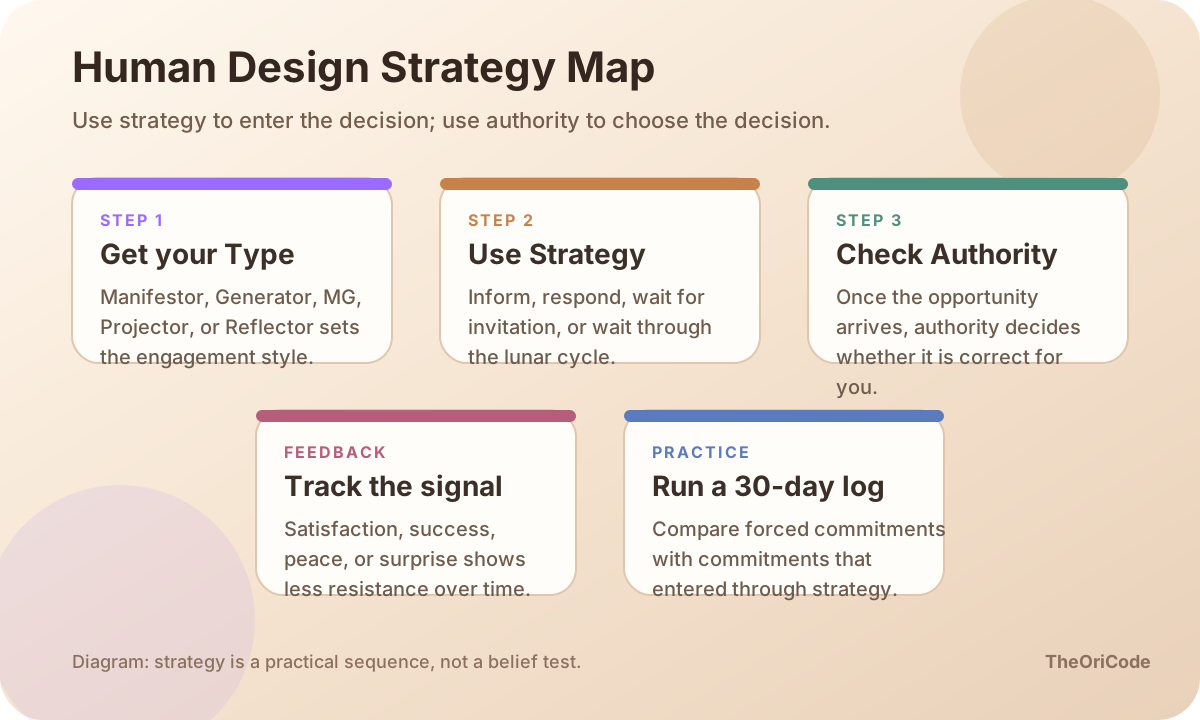
Diagram: Human Design strategy works best as a sequence. First identify your type, then use strategy to meet opportunities, then use authority to decide what is correct.
Here's the full comparison. Population percentages are the commonly cited figures in the Human Design community and vary slightly by dataset.
| Type | Share of population | Strategy | What it looks like | Signature (working) | Not-self theme (forcing) |
|---|---|---|---|---|---|
| Manifestor | ~8–9% | Inform before acting | Tell the people your actions will affect before you move | Peace | Anger |
| Generator | ~37% | Wait to respond | Let life bring you something concrete, then check your gut | Satisfaction | Frustration |
| Manifesting Generator | ~33% | Respond, then inform | Respond first like a Generator, inform like a Manifestor | Satisfaction | Frustration and anger |
| Projector | ~20% | Wait for the invitation | Be recognized for your perspective before offering it | Success | Bitterness |
| Reflector | ~1% | Wait a lunar cycle | Give big decisions roughly 28 days before committing | Surprise | Disappointment |
A few clarifications that shorter guides tend to skip:
- "Waiting" never means passivity. A waiting strategy still involves showing up, building skills, and being visible. It governs initiation of commitments, not activity in general.
- The lunar cycle for Reflectors refers to the Moon transiting the full wheel of gates, roughly 28–29.5 days — the point is that a Reflector's experience of a decision shifts across that window, so sampling it over time produces a more stable answer than a snap judgment.
- Manifesting Generators carry a genuinely hybrid strategy. The "inform" half is the part most MGs drop, and it's usually where their interpersonal friction comes from.
Each Strategy in Practice
Manifestor: Inform Before Acting
Manifestors are the only type designed to initiate from internal urges without an external prompt. The catch: their action impacts other people, and people who get surprised tend to resist. Informing — "I'm going to restructure this project," "I'm leaving early today" — is a courtesy protocol, and it's not asking permission. Manifestors who skip it report a recurring pattern: they act cleanly, then spend weeks managing pushback that a two-sentence heads-up would have prevented.
Generator: Wait to Respond
"Wait to respond" is the most misread strategy in Human Design. It doesn't mean sit at home until opportunity knocks. It means: let something concrete arrive — a job posting, a question, an offer, a problem in front of you — and check whether your gut lights up before committing energy to it. Generators run on sacral energy that is reliable when engaged with the right work and punishing when forced into the wrong work. The practical discipline is refusing to talk yourself into things your body already answered "no" to.
Manifesting Generator: Respond, Then Inform
Manifesting Generators respond like Generators but move like Manifestors — fast, multi-track, often skipping steps. Their strategy has two parts because their friction has two sources: initiating without a real response produces Generator-style frustration, and moving fast without informing produces Manifestor-style resistance from others. MGs also commonly quit things mid-way, which is mechanically normal for the type; informing the people affected turns "flaky" into "fast-moving."
Projector: Wait for Recognition and the Invitation
Projectors are designed to see systems and people clearly, but their guidance only lands when it's been asked for. The invitation matters for the big commitments — a role, a relationship, a collaboration — not for everyday actions like sending an email or publishing work. A Projector who broadcasts advice uninvited gets ignored or resented and ends up bitter; the same insight, offered after being asked, gets adopted. The working posture for Projectors is: build visible mastery, make it easy to be found, and let recognition initiate the exchange.
Reflector: Wait Through a Lunar Cycle
Reflectors have no consistently defined centers, which makes them deeply sensitive to their environment and the people in it. A decision that feels obvious on day 3 can look completely different on day 17, because a Reflector is sampling it through different transits and different company. The strategy is patience as instrumentation: track a major decision across a full lunar cycle, notice which version of the answer keeps returning, and commit to that one.
Strategy vs. Authority: Which Does What
Strategy and authority are constantly conflated, and the confusion makes both tools weaker. They answer different questions:
- Strategy governs engagement — how opportunities are supposed to enter your life (you initiate and inform, you respond, you accept invitations, you wait out the cycle).
- Authority governs selection — once something has arrived through your strategy, how do you know whether it's correct for you? That might be a sacral response, an emotional wave, splenic instinct, or another mechanism depending on your chart.
A Generator with emotional authority, for example, waits to respond (strategy) and sleeps on the response before committing (authority), because emotional authority needs time for the wave to settle. Skipping either half produces a recognizable failure: right opportunity taken at the wrong moment, or wrong opportunity taken smoothly. For the full decision-making layer, read our Human Design authority guide.
Our Take: Strategy Is Calibration, Not Obedience
Most guides present strategy as a rule to obey — as if a Projector who ever initiates has broken the system. Across the charts we generate and the reports we write at TheOriCode, we see something more useful: the people who get value from strategy treat it as a calibration instrument, and the people who burn out on it treat it as a compliance test.
The compliance framing fails in a predictable way. A Generator hears "wait to respond," stops applying for jobs, and calls the resulting stagnation "trusting the process." A Projector hears "wait for the invitation" and uses it to rationalize invisibility. In both cases the strategy has been converted into permission to disengage — which is the opposite of what the mechanism describes. Waiting strategies constrain commitment, not presence. The Generator still puts their work where life can respond to it; the Projector still builds the expertise that attracts invitations.
There's also a cultural-lens point we're positioned to make, since we work on both Western and Eastern systems. Readers who come to Human Design from BaZi often expect strategy to work like a timing system — the way luck pillars describe when external conditions shift. It doesn't. BaZi models the weather; Human Design strategy models your posture in any weather. One tells you the season, the other tells you how you personally are built to plant. That's also why the two systems combine well instead of competing — a comparison we've written up in BaZi vs Western astrology, and it applies equally to Human Design: different instruments, different questions.
So our recommendation runs opposite to the "surrender to your strategy" framing common in Human Design spaces: run it as a two-column experiment. For a few weeks, note which commitments entered your life through your strategy and which you forced, then compare how they played out. Keep strategy if your own data supports it. That standard — your logged experience, not a teacher's assertion — is the only one worth trusting with a system like this.
How to Test Your Strategy in 30 Days
You don't need to believe any of the metaphysics to run the experiment. You need your type, a note-taking app, and a month.
- Get your chart. Use our free BaZi and Human Design chart calculator — it needs your birth date, time, and location, and no email. Confirm your type against the five Human Design types so you know which strategy applies.
- Log engagements, not feelings. Each time you take on a commitment, note one line: did it arrive via your strategy (response, invitation, informed initiation, full cycle) or did you force it?
- Score outcomes weekly using your type's signature and not-self theme as the scale. Did the commitment trend toward satisfaction/success/peace, or toward frustration/bitterness/anger?
- Review at day 30. Look for the split: most people find their forced commitments cluster on the not-self side. If yours don't, that's real data too — the honest version of this practice includes the possibility that it earns no place in your life.
If the experiment holds and you want the full picture — type, strategy, authority, profile, and centers interpreted together rather than as isolated labels — that's what our Core reading is built for.
FAQ
What is Human Design strategy in simple terms? It's the engagement mode assigned to your type: Manifestors inform before acting, Generators wait to respond, Manifesting Generators respond then inform, Projectors wait for the invitation, and Reflectors wait a lunar cycle. It describes how opportunities are meant to enter your life.
Is strategy the same as authority? No. Strategy is how you engage with life and opportunities; authority is how you decide, once an opportunity has arrived, whether it's correct for you. They're designed to be used in sequence, and using one without the other is the most common beginner mistake.
Does "wait to respond" mean I can't pursue goals? No. Responding governs how commitments start, not how hard you work. A Generator can build skills, publish work, and show up everywhere — the discipline is waiting for something concrete to respond to (a posting, an offer, a question) before committing energy, instead of initiating from a mental "should."
How do I know if my strategy is working? Track your type's feedback pair. Strategy working tends to feel like satisfaction (Generators and MGs), success (Projectors), peace (Manifestors), or being pleasantly surprised (Reflectors). Strategy ignored tends to produce frustration, bitterness, anger, or disappointment as a background tone rather than a one-off mood.
What happens if I ignore my strategy? Nothing dramatic — Human Design doesn't claim punishment mechanics. The claim is narrower: engagements you force tend to carry more resistance and end in your not-self theme more often. That's a testable claim, which is exactly why we suggest logging it for 30 days rather than taking it on faith.
Do Manifesting Generators really have to inform? In the system's terms, yes — it's the half of their strategy most MGs skip. Informing matters most when your speed or a change of direction affects other people. MGs who add a brief heads-up before pivoting typically report less pushback from partners, teams, and family.
Can two people with the same strategy apply it differently? Yes. Strategy is set by type, but authority, profile, and defined centers shape how it plays out. Two Projectors both wait for invitations, but one may need to sleep on each one (emotional authority) while the other can trust an in-the-moment recognition (splenic authority).
Where to Go Next
Strategy is the entry point, and it gets sharper with the rest of the chart around it: generate your full Human Design chart, confirm your type, and run the 30-day log before adding more layers. When you're ready for the next layer, the authority guide is the natural continuation — strategy gets an opportunity to your door, and authority decides whether to let it in.