
Human Design
Human Design Not-Self Themes: What Frustration, Anger, Bitterness, and Disappointment Are Telling You
In Human Design, frustration, anger, bitterness, and disappointment are not character flaws — they're navigational signals. Each type has a specific not-self theme that appears when you're living from conditioning rather than your authentic design. Learning to read these signals is one of the most practical tools Human Design offers.
Published on 2026-04-17·11 min read·28 views·The OriCode Team
Quick Answer
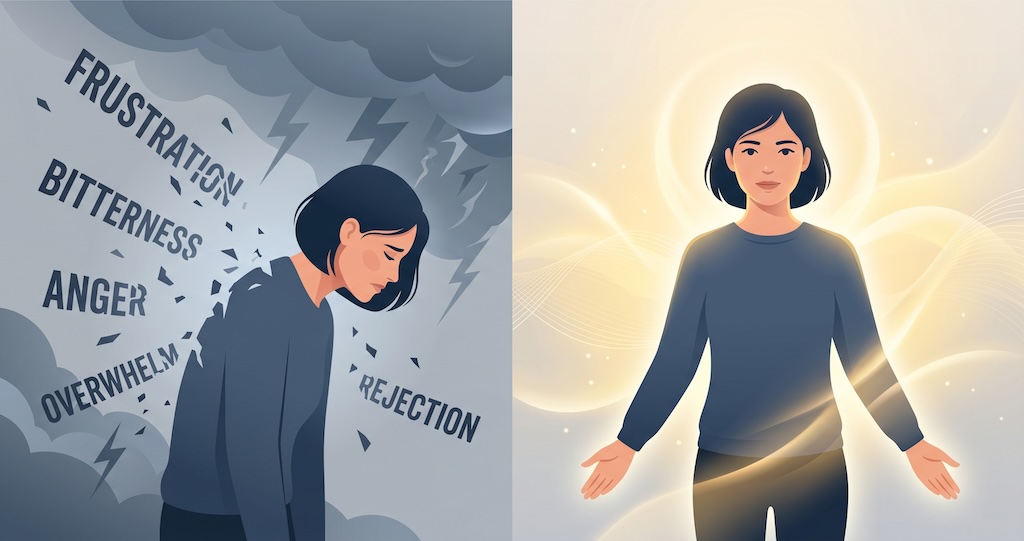
In Human Design, the "not-self theme" is the emotional signal that appears when you're living out of alignment with your design. Each type has a specific not-self theme: Generators feel frustration, Manifesting Generators feel frustration and anger, Projectors feel bitterness, Manifestors feel anger, and Reflectors feel disappointment. These emotions are not character flaws — they're feedback signals telling you to return to your strategy and authority.
What Is the Not-Self in Human Design?
The "not-self" is the version of you that has been conditioned by your environment, upbringing, and the open centers in your chart. It's the set of beliefs, behaviors, and decisions that come from the mind — specifically the not-self mind that justifies decisions based on fear, desire for approval, or trying to be something you're not.
Every Human Design type has a not-self theme: a reliable emotional signature that appears when you're operating from conditioning rather than your authentic design. Learning to recognize your not-self theme is one of the most practical tools Human Design offers — not to judge yourself, but to use the discomfort as a compass pointing back toward alignment.
The opposite of the not-self theme is the signature — the emotional state that appears when you are living in alignment. Both are worth knowing.
The 5 Not-Self Themes (and Their Signatures)
| Type | Not-Self Theme | Signature |
|---|---|---|
| Generator | Frustration | Satisfaction |
| Manifesting Generator | Frustration + Anger | Satisfaction + Peace |
| Projector | Bitterness | Success |
| Manifestor | Anger | Peace |
| Reflector | Disappointment | Surprise and Delight |
Generator: Frustration
What It Looks Like
A Generator who is not living their design feels chronic, low-grade frustration. It's the feeling of pushing against walls, of working hard without things moving, of doing things that don't light you up because you should do them.
This frustration often builds quietly. You may not notice it until it spills into anger or manifests as physical exhaustion even after what should be restorative sleep. You might feel resentful of the work you've committed to, then guilty about the resentment.
Where It Comes From
Generator frustration almost always originates from ignoring the sacral response and initiating from the mind instead.
The Generator's strategy is to wait to respond — to let something in the environment spark a genuine gut-level "yes" before committing energy. When a Generator initiates from logic ("I should want this job," "this is the sensible relationship to pursue"), they often commit to things that don't actually light them up. The sacral didn't respond. The mind made the call.
The result is a Generator doing work — often impressive, high-output work — that doesn't produce satisfaction. They're technically successful and chronically frustrated.
The Return Path
Notice when frustration appears, and ask: Did I respond to this, or did I initiate it from my head?
If you initiated from the mind, the frustration is the correct feedback. You don't have to blow up your life — but you can start making smaller decisions from sacral response and let the larger picture realign over time.
Generator in alignment feels satisfaction — the deep, embodied satisfaction of work that uses your energy on things that genuinely lit you up at the sacral level.
Manifesting Generator: Frustration and Anger
What It Looks Like
Manifesting Generators carry both Generator and Manifestor not-self patterns. Frustration appears when they're stuck doing things that don't respond to them. Anger flares when they feel blocked, controlled, or forced to move at a pace that doesn't match their natural speed.
Manifesting Generators move fast and often skip steps. When they're forced into linear processes that don't match their multi-passionate, skip-ahead design, the anger is quick and intense.
Where It Comes From
Two sources:
- Mind-initiated commitments (Generator frustration) — saying yes to things the sacral didn't actually respond to
- Being blocked or controlled (Manifestor anger) — anyone or any system that prevents them from following their natural momentum
Manifesting Generators also frustrate themselves by skipping steps and then having to backtrack. The key insight: backtracking isn't failure for an MG — it's literally part of how their design works. Fighting it creates the frustration; accepting it as the natural path reduces it significantly.
The Return Path
When you feel frustration building: Was there a sacral response here, or did I agree with my head?
When you feel anger: Am I being blocked from something my sacral genuinely responded to, or am I trying to force something that wasn't mine to initiate?
The signature state for a Manifesting Generator is satisfaction and peace — the satisfaction of sacral-aligned work, and the peace that comes when they inform others and move without resistance.
Projector: Bitterness
What It Looks Like
Projector bitterness is often quiet and slow-building. It accumulates over years of being overlooked, of offering guidance that was dismissed, of working at Generator-level energy expenditure without Generator-level recovery, of waiting for recognition that never came.
Bitterness in a Projector can look like cynicism, withdrawal, harsh judgment of others, or a creeping belief that they're fundamentally undervalued.
Where It Comes From
Projector bitterness has two main sources:
1. Giving guidance without being invited. Projectors see deeply into systems and people. They often know exactly what someone needs to hear — and say it without being asked. The result is almost always the same: the insight is rejected, and the Projector feels invisible. The problem isn't the insight. It's the timing.
A Projector's strategy is to wait for the invitation. Not because their wisdom is less valuable, but because unsolicited advice — no matter how accurate — is rarely received. When a Projector waits for a genuine "what do you think?" before sharing their observations, the guidance lands completely differently.
2. Working like a Generator. Projectors don't have a defined Sacral Center. They can amplify Generator energy when they're around Generators, which can feel like they're running on Generator fuel — for a while. But they're not. Projectors need substantially more rest than Generators and cannot sustain Generator work rhythms without depleting themselves.
The cultural glorification of busyness and productivity hits Projectors particularly hard. A Projector who burns through their energy matching Generator output will run dry and find themselves bitter about a life spent working hard at the wrong pace.
The Return Path
When bitterness appears, ask: Am I waiting for genuine invitations, or pushing my guidance on people who didn't ask?
And: Have I been resting enough? Am I working at my pace or trying to match someone else's?
A Projector in alignment feels success — not necessarily financial success (though that often follows), but the deep recognition that comes when your guidance is invited, received, and makes a real difference.
Manifestor: Anger
What It Looks Like
Manifestor anger is immediate, direct, and often confusing to people who don't understand Human Design. Manifestors have a closed and repelling aura — they're designed to move independently, to initiate without needing approval. When that independence is blocked or monitored, anger arises fast.
This anger isn't irrational. It's the design signaling interference. But because Manifestors are a small percentage of the population (about 8%), most people around them don't understand why control feels so intolerable to them.
Where It Comes From
Being controlled, monitored, or asked to justify their actions. Manifestors inform — they don't ask permission. The distinction matters. Informing is telling people what's about to happen so they can prepare. It's not inviting input or negotiating the decision. When the people in a Manifestor's life confuse informing with asking permission, and start offering opinions or roadblocks, the Manifestor experiences this as control.
Initiating without informing. Ironically, the Manifestor who doesn't inform creates the very control they resent. When people don't know what a Manifestor is doing, they try to manage the uncertainty — which looks like interference. Manifestors who inform proactively (even briefly) find that resistance drops dramatically.
The Return Path
When anger appears: Am I being genuinely blocked from something I initiated correctly, or am I resisting informing because it feels like asking for permission?
The signature state for a Manifestor is peace — the rare, spacious peace of moving through the world without resistance, because they informed, and the people around them trusted them.
Reflector: Disappointment
What It Looks Like
Reflector disappointment is not a momentary feeling — it's a deep, chronic sense that the world (or the specific environment they're in) is not reflecting the beauty and potential it's supposed to. A Reflector who has been in the wrong environment, with the wrong people, for long enough feels a pervasive disappointment that is hard to articulate but impossible to ignore.
Where It Comes From
Reflectors have no defined centers — they are completely open, completely receptive, and completely shaped by their environment. This makes environment the most critical factor in a Reflector's experience. A Reflector in a healthy, loving, aligned community feels an amplified version of that health. A Reflector in a toxic, contracted, or misaligned environment feels an amplified version of that toxicity — and has very limited ability to shield against it.
Making decisions too quickly. Reflectors' strategy is to wait a full lunar cycle (28 days) before making major decisions. This gives their completely open chart time to sample the full range of lunar energies before settling on clarity. Reflectors who make decisions in the moment, under pressure, or based on other people's authority rather than their own lunar process consistently find themselves disappointed by the outcomes.
The Return Path
When disappointment appears: Is this environment actually reflecting what I value? Am I here by my own choice, or did I decide too quickly under someone else's pressure?
A Reflector in alignment experiences surprise and delight — the genuine wonder of noticing how life organizes itself when they're in the right environment, around the right people, and making decisions at their own pace.
How to Work With Your Not-Self Theme
The not-self theme is not a problem to solve. It's a signpost. Here's how to use it practically:
1. Treat the emotion as data, not failure. When you feel frustration, bitterness, anger, or disappointment, don't judge yourself for feeling it. Ask what it's pointing to. The not-self theme is your design's way of saying "something is off here."
2. Trace it back to a decision. Most not-self themes can be traced to a decision that was made from the mind rather than the authority. Ask yourself: when did I commit to this? Did I use my authority, or did I think my way into it?
3. Don't try to fix it by pushing harder. Generators often respond to frustration by working harder, as if the problem is effort. Projectors often respond to bitterness by offering more guidance unsolicited. Manifestors double down when angry. None of these responses work — they deepen the conditioning. Return to strategy instead.
4. Track your signature. Learn what satisfaction (Generator), success (Projector), peace (Manifestor), or delight (Reflector) feels like in your body. The more clearly you can identify the signature, the easier it becomes to notice when you've drifted away from it.
Related Reading
Understanding your not-self theme is one part of the Human Design picture. The foundation is knowing your type and how it operates:
- Human Design types explained — full guide to all 5 types
- Human Design Generator guide — sacral response, satisfaction, and the Generator's correct path
- Human Design Projector guide — recognition, invitations, and Projector success
- Human Design authority guide — how to make decisions using your inner authority
For a complete chart analysis that shows your type, authority, defined centers, and how they interact, get your Human Design report at The OriCode.
FAQ
Is the not-self theme always a negative emotion? The not-self theme is always an uncomfortable emotion — frustration, anger, bitterness, disappointment — but it's not negative in the sense of being "bad." It's neutral information. The discomfort is the design, not a punishment.
What if I feel all four not-self themes? If you frequently feel all four — frustration, anger, bitterness, and disappointment — it's worth examining which is most persistent and which contexts trigger it. You may also be absorbing others' not-self themes through your open centers.
Can someone who has done a lot of personal growth still experience their not-self? Yes. The not-self theme doesn't disappear. Deconditioning in Human Design is a lifelong process (Ra Uru Hu described it as a 7-year process). What changes is how quickly you recognize the signal and how you respond to it.
What's the difference between the not-self theme and conditioning? Conditioning is the process; the not-self theme is the symptom. Open centers are conditioned by the energy of defined centers around them. The not-self theme is how that conditioning expresses in your emotional state.
Does everyone have a signature theme? Yes. Every type has both a not-self theme (discomfort signal) and a signature theme (alignment signal). Most Human Design conversations focus on the not-self, but the signature is equally important to know — it's what you're aiming for.
My partner always triggers my not-self theme. Does that mean we're incompatible? Not necessarily. Sometimes one person's defined center consistently activates an uncomfortable pattern in your open center — but that activation is data, not a verdict. Understanding what's happening mechanically can transform a frustrating dynamic into a productive one. See the Human Design relationships guide for more.