
Human Design
Human Design Gates Explained: The 64 Gates and How They Shape Your Design
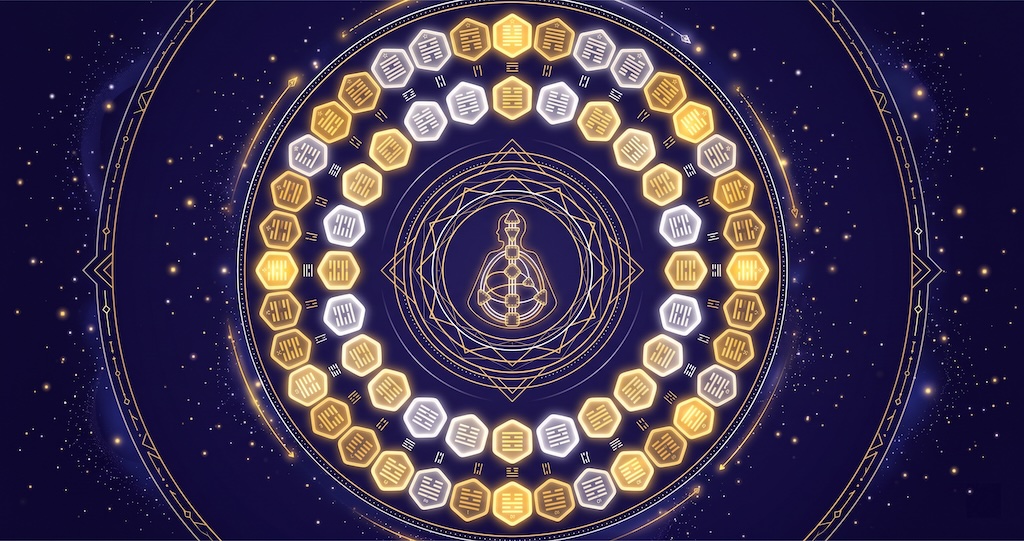
The 64 Human Design gates are archetypes derived from the I Ching hexagrams. Each gate carries a specific theme, gift, and shadow. Your defined gates form the consistent threads of your personality. When two people each have one gate of the same channel, they form an electromagnetic — often felt as instant, unexplainable attraction.
Published on 2026-04-17·10 min read·124 views·The OriCode Team
Quick Answer
Human Design Gates are 64 energy archetypes derived from the 64 hexagrams of the I Ching. Each gate represents a specific theme, gift, or challenge. Your defined gates — the ones activated in your chart by the Sun, Moon, planets, and Earth — shape your consistent personality traits, communication style, and gifts. When two people each have one gate of the same channel, they form an electromagnetic connection that feels like instant recognition.
What Are Human Design Gates?
The 64 gates in Human Design correspond directly to the 64 hexagrams of the I Ching (易經) — the ancient Chinese divination text that maps 64 archetypal patterns of energy and change. Ra Uru Hu, the founder of Human Design, mapped these hexagrams onto the nine energy centers of the BodyGraph, creating a system that connects ancient wisdom with modern genetics (specifically, the 64 codons of human DNA).
Each of the nine energy centers in the BodyGraph contains several gates. The gates are the entry and exit points where energy flows between centers. When a gate is defined (colored in your chart), it means a planet was positioned in that gate at your birth (or 88 days before your birth), creating a consistent activation of that energy in your life.
Defined gates are part of your consistent character. You express these gate energies reliably, regardless of your environment. Undefined gates — gates not activated in your chart — are available to you but inconsistent. You may experience them when you're with someone who has them defined, but they're not part of your stable, reliable nature.
How Gates Become Channels
When two gates connect two centers in the BodyGraph, they form a channel. Channels are where the real power in your chart lives — they represent complete, consistent energy circuits.
A gate activated in your chart but without its partner gate forms what's called a "hanging gate" or "dangling gate." These half-channels create a sense of searching or reaching — you have the energy, but it's not fully expressed until you connect with someone who has the partner gate. This is why some people feel an immediate, unexplainable pull toward someone — their hanging gate just found its partner.
There are 36 channels in Human Design, each formed by two gates. A fully defined channel means both partner gates are activated in your chart, creating a self-contained circuit that doesn't depend on anyone else.
The 64 Gates: Themes and Centers
Below is a summary of all 64 gates grouped by their energy center. Each gate has a brief theme so you can identify your defined gates and what they mean for you.
Head Center (Inspiration / Pressure)
| Gate | Theme |
|---|---|
| Gate 64 | Confusion that becomes clarity — the pressure to make sense of the past |
| Gate 61 | Inner truth, the pressure to know the unknowable |
| Gate 63 | Doubt and skepticism, logical pressure to find answers |
Ajna Center (Conceptualization)
| Gate | Theme |
|---|---|
| Gate 47 | Realization — making sense of the past through retrospection |
| Gate 24 | Rationalization, the return to recurring thoughts |
| Gate 4 | Formulization, logical solutions and answers |
| Gate 11 | Ideas, the archive of experience |
| Gate 43 | Insight, breakthrough knowing |
| Gate 17 | Opinions, logical assessment of possibilities |
Throat Center (Communication / Action)
| Gate | Theme |
|---|---|
| Gate 62 | Details, the expression of facts |
| Gate 23 | Assimilation, translating knowing into language |
| Gate 56 | Storytelling, stimulation through narrative |
| Gate 35 | Change, the hunger for new experience |
| Gate 12 | Caution, selective and articulate expression |
| Gate 45 | Gathering, the king/queen who commands resources |
| Gate 33 | Privacy, retreat and remembrance |
| Gate 8 | Contribution, the individual voice that makes its mark |
| Gate 31 | Influence, natural leadership |
| Gate 20 | Contemplation, being present and in the now |
| Gate 16 | Skills, enthusiasm for what can be mastered |
G Center (Identity / Direction / Love)
| Gate | Theme |
|---|---|
| Gate 1 | Self-expression, creative self-direction |
| Gate 13 | The listener, holding others' secrets |
| Gate 25 | The spirit of the self, universal love |
| Gate 46 | The determination of the body, luck through being in the right place |
| Gate 2 | The receptive, receptivity to higher direction |
| Gate 15 | Extremes, love of humanity in all its forms |
| Gate 10 | Self-love, behavior aligned with personal truth |
| Gate 7 | The role of the self, leadership through example |
Heart/Will Center (Willpower / Ego)
| Gate | Theme |
|---|---|
| Gate 26 | The taming power of the great — the salesperson |
| Gate 51 | Shock, initiating by example through competition |
| Gate 21 | The treasurer, control of resources |
| Gate 40 | Aloneness, the right to rest and be alone |
Solar Plexus (Emotional Center)
| Gate | Theme |
|---|---|
| Gate 6 | Friction, emotional intimacy and conflict |
| Gate 37 | Friendship, the bargain and family bonds |
| Gate 22 | Openness, grace through listening |
| Gate 36 | Crisis, emotional depth through experience |
| Gate 49 | Revolution, transformation of principles |
| Gate 55 | Abundance, emotional richness through spirit |
| Gate 30 | Fates, desire and the burning of feelings |
Spleen Center (Intuition / Survival)
| Gate | Theme |
|---|---|
| Gate 48 | Depth, the fear of inadequacy that drives mastery |
| Gate 57 | Intuitive clarity, the gentle wind that reads the room |
| Gate 44 | Coming to meet, instincts about the past |
| Gate 50 | Values, the weight of responsibility for others |
| Gate 32 | Continuity, survival instinct for what lasts |
| Gate 28 | The game player, the search for meaning |
| Gate 18 | Correction, the drive to improve |
Sacral Center (Life Force / Response)
| Gate | Theme |
|---|---|
| Gate 5 | Fixed rhythms, waiting for the right patterns |
| Gate 14 | Power skills, empowered through correct response |
| Gate 29 | The abysmal, the commitment that comes from saying yes |
| Gate 59 | Sexuality, the ability to break down barriers |
| Gate 9 | Focus, the detail that powers concentration |
| Gate 3 | Ordering, the difficulty of being new |
| Gate 42 | Growth, the completion of cycles |
| Gate 27 | Caring, nurturing others from an aligned sacral |
| Gate 34 | Power, pure individual power of the Sacral |
Root Center (Pressure / Adrenaline)
| Gate | Theme |
|---|---|
| Gate 58 | Joy, the fuel to improve what's alive |
| Gate 38 | Opposition, the fighter who finds purpose in struggle |
| Gate 54 | Ambition, the drive to rise and transform |
| Gate 53 | Beginnings, pressure to start new cycles |
| Gate 60 | Acceptance, the limitation that creates innovation |
| Gate 52 | Stillness, the pressure to be still and focused |
| Gate 19 | Wanting, sensitivity to needs and the future |
| Gate 39 | Provocation, the spirit of the provocateur |
| Gate 41 | Decrease, the beginning of imagination |
The 9 Circuits: How Gates Group Into Themes
The 64 gates organize into three major circuits that describe the fundamental drives in human life:
The Tribal Circuit
Gates that govern survival, community, support, and material resources. These gates are transactional — energy flows in exchange relationships. Tribal gates emphasize family, resources, business, and the bonds that hold communities together.
Key tribal channels include: The Channel of Community (37-40), The Channel of Money (44-26), The Channel of Preservation (50-27).
The Collective Circuit
Gates that govern shared experience, knowledge, and the evolution of civilization. Collective circuit gates share for the sake of sharing — they broadcast to the group with no expectation of direct return.
Two sub-circuits:
- Logic (Understanding): Forward-looking, pattern-finding, establishing what works for future generations
- Sensing (Experiential): Backward-looking, storytelling, transmitting what was experienced
The Individual Circuit
Gates that govern mutation, impulse, and unique creative expression. Individual circuit energy is unpredictable and often felt as "out of step" with collective norms. These gates don't operate on tribal exchange or collective sharing logic — they move when the impulse arises, and their impact on others often comes as an unexpected breakthrough.
Knowing which circuit your defined gates belong to helps you understand your fundamental relational style — whether you're primarily here to serve community, share with the collective, or catalyze individual mutation.
Your Profile and Your Gates
Your Human Design profile adds another layer to your gates. Each gate has six lines (like the I Ching hexagram lines), and your profile number indicates which lines are most active in your chart. A person with profile 1/3, for example, will express their Gate 64 (Confusion becoming clarity) through the investigative, foundation-building energy of Line 1 in that gate.
This is why two people with the same defined gates can express them quite differently — their profile lines shape how the gate's archetypal energy flows through their individual nature.
Practical Ways to Use Your Gate Knowledge
1. Read your defined gates as a personality map. Your defined gates are consistent, reliable aspects of your character. If you have Gate 57 defined (intuitive clarity), you likely have an unusual ability to read environments and people in real time. If you have Gate 13 defined (the listener), people naturally share their secrets with you.
2. Understand your hanging gates as areas of search. If you have Gate 15 (love of humanity) but not Gate 5 (fixed rhythms), you have a half-channel reaching toward the Sacral Center. You may feel drawn to consistent, reliable Sacral-type people — Generators who have Gate 5 defined will feel electromagnetically complete with you.
3. Map your channels to see your consistent gifts. Look for completed channels in your chart — these are your most reliable, powerful expressions. A completed Channel of Charisma (34-20) means you have a consistent, in-the-moment presence that others feel immediately. A completed Channel of Struggle (38-28) means you're designed to find meaning through overcoming adversity.
4. Use gate awareness to reduce not-self behavior. If you have Gate 26 defined (the salesperson's gate — will and marketing), but you're not using your willpower in a genuine direction, you may find yourself in the not-self of that gate — inflating or manipulating rather than genuinely advocating. Knowing the shadow side of your defined gates helps you catch when you've drifted.
Getting Your Full Gate Analysis
Your complete Human Design chart shows all your defined gates, channels, and their circuit affiliations. A full reading at The OriCode includes:
- All your defined gates and their core themes
- Your complete channels and what they mean as consistent gifts
- Your profile lines and how they color each gate's expression
- The full interaction between your authority, centers, and gates
For the foundational concepts that make gate analysis meaningful, start with:
- Human Design centers explained — understanding defined vs. open centers
- Human Design authority guide — how decisions are made
- Human Design profiles explained — the 12 profiles and their lines
- Human Design types complete guide — the 5 types overview
FAQ
What are the most important gates in Human Design? There's no single "most important" gate. However, gates in your authority center (for example, Gate 2 in the G Center for those with Self-Projected authority) carry extra significance because they directly govern how you make decisions. Gates in your defined channels are more consistently expressed and influential than hanging gates.
Do my undefined gates mean I'm missing those qualities? No. Undefined gates are available to you through other people and environments. They're areas of wisdom and conditioning — you learn about them experientially by being around people who have them defined.
What is the difference between a gate and a channel? A gate is one activation point between two centers. A channel is the complete connection formed when both gates of a center-to-center pathway are activated. Channels represent complete, consistent energy circuits; individual gates are the building blocks of those circuits.
Can I activate new gates through personal development? Not in the sense of changing your chart. Your chart is fixed from birth. But deconditioning work — living your strategy and authority — allows you to express your defined gates from their highest frequency rather than their shadow frequency.
What is an "electromagnetic" in Human Design? An electromagnetic occurs when two people each have one gate of the same channel. Together, they "complete" the channel, creating a powerful attraction and a sense of recognition or fate. Electromagnetics are often magnetic but can also be destabilizing if both people are not operating from their own designs.
How do gates relate to the I Ching? The 64 gates map directly to the 64 hexagrams of the I Ching. Each hexagram has six lines, which in Human Design correspond to the six profile lines. Gate 64 = Hexagram 64 (Before Completion), Gate 1 = Hexagram 1 (The Creative), and so on. This gives every gate its name, its archetype, and its line-by-line variation.
What does it mean to have many gates in the same circuit? If most of your defined gates fall in the Tribal Circuit, you're primarily here to operate within communities, families, and exchange relationships. Collective Circuit-heavy charts tend to be focused on sharing knowledge or experience broadly. Individual Circuit-heavy charts are here to be catalysts — their impact on others comes through mutation rather than systematic sharing.